How to Read Candle Flames in Witchcraft: Meanings, Signs & Symbolism
Few things capture my attention quite like the gentle glow of a candle.
Even outside of witchcraft, I’ve always found myself mesmerized by the way a flame moves. Some evenings it burns so calmly it barely seems to flicker, while other times it dances wildly, grows unexpectedly tall, or suddenly becomes soft and quiet. It’s almost impossible not to wonder if it’s trying to tell us something.
When I first began practicing witchcraft, I noticed that many experienced witches paid close attention to their candle flames during rituals and spells. Over time, I discovered that observing a flame isn’t really about predicting the future or looking for dramatic signs. Instead, it’s another way of slowing down, becoming more present, and paying attention to both the energy of the ritual and my own intuition.
That’s one of the things I love most about candle magic.
Lighting a candle naturally encourages us to pause for a few moments. The world becomes a little quieter, our breathing slows, and our focus settles on that small but powerful flame. Whether you’re setting an intention, meditating, praying, or performing a spell, the candle often becomes the heart of the experience.
Many traditions believe that fire has long been a bridge between the physical and spiritual worlds. Others see the flame simply as a symbol of transformation, hope, and inner strength. Whichever perspective resonates with you, watching a candle burn can become a beautiful mindfulness practice all on its own.
Throughout this guide, we’ll explore some of the most common candle flame behaviors and the meanings many witches associate with them. We’ll also talk about practical explanations because not every flicker is magical, and learning to balance intuition with common sense is an important part of any spiritual practice.
Above all, remember that candle flame reading isn’t about fear or finding hidden warnings everywhere. It’s about observation, curiosity, and building a deeper connection with your own practice.
Sometimes the most meaningful message isn’t found in the flame itself.
It’s found in the quiet moments you spend watching it.
Why Candle Flames Matter in Witchcraft
Fire has held a sacred place in human history for thousands of years. Long before electricity illuminated our homes, people gathered around fire for warmth, protection, storytelling, celebration, and spiritual ceremonies. Even today, there’s something deeply comforting about sitting beside a flickering flame, especially after a long day.
In witchcraft, candles are often used to represent transformation. As the wax slowly melts and the flame continues to burn, it reminds us that change is an active process. Intentions become actions, old patterns begin to dissolve, and new possibilities slowly take shape. The candle becomes more than a source of light. It becomes a symbol of the energy we’re putting into our work.
One of the reasons candle magic is so popular is because it’s wonderfully accessible. You don’t need an elaborate altar or an expensive collection of tools to begin. A single candle, a clear intention, and a few quiet moments are often enough to create a meaningful ritual.
Over the years, many witches have also begun observing the way a candle burns during spells or meditation. A calm flame might be interpreted as steady, focused energy, while a lively flame may suggest movement or emotional intensity. These interpretations have been passed down through different traditions, but they’re not universal rules. They’re gentle guidelines that can help you reflect on your own experiences rather than fixed meanings that apply every single time.
I’ve found that candle flame reading is less about receiving messages from somewhere outside yourself and more about becoming aware of what’s happening within. The flame encourages you to slow down, notice small details, and trust your own observations instead of rushing to conclusions.
That’s why I always encourage beginners to think of candle flames as part of a conversation rather than a fortune teller. The candle isn’t there to tell you exactly what will happen next. It’s there to help you become more present, more mindful, and more connected to your own intuition.
Before You Interpret a Candle Flame
One of the biggest lessons I’ve learned over the years is that not every unusual candle flame is a magical sign. I know that might sound surprising in a witchcraft article, but I truly believe it’s important to approach our practice with both an open mind and a healthy dose of common sense. Sometimes a candle flickers because the energy in a ritual feels emotional or intense. Other times, it’s simply because someone opened a window or walked past the table.
Before I begin interpreting a flame, I always take a moment to look at the physical environment first. Is there a draft in the room? Is the wick unusually long? Am I burning a heavily scented candle or one filled with herbs, glitter, or essential oils? These small details can have a noticeable effect on how a candle burns.
I’ve found that ruling out the practical explanations doesn’t make the experience any less magical. In fact, I think it strengthens it. When you know the flame isn’t reacting to something obvious, you’re able to observe it with greater confidence and trust your own intuition instead of second-guessing every little movement.
That’s one of the reasons I encourage beginners not to rush to conclusions. Candle reading isn’t about spotting one flicker and immediately deciding it has a profound meaning. It’s about watching the flame over time, noticing patterns, and considering the entire experience rather than a single moment.
Magic and the physical world aren’t separate from one another. They work together.
Common Physical Reasons a Candle Flame Behaves Differently
Before looking for symbolic meanings, it’s worth remembering that candles are still physical objects. Their size, ingredients, and surroundings all influence the way they burn.
A moving flame is often caused by something as simple as a draft. Air from an open window, a fan, heating vent, or even someone walking nearby can make a flame dance or lean to one side. This is one of the most common reasons a candle appears unusually active.
The wick also plays an important role. If it’s too long, the flame may become larger than expected, flicker excessively, or produce smoke. Trimming the wick before each use usually creates a steadier, cleaner burn and helps the candle last longer.
The type of wax matters too. Beeswax, soy wax, paraffin, and blended waxes all burn a little differently. Handmade candles can sometimes behave differently from mass-produced ones, and natural variations don’t necessarily mean anything is wrong.
If you’re using herbs, dried flowers, resins, or essential oils in your candle magic, these can also affect the flame. Small pieces of plant material may briefly catch fire, create tiny crackling sounds, or cause the flame to grow and shrink throughout the ritual. While some witches include these observations in their interpretations, it’s always helpful to remember that there’s a perfectly natural explanation as well.
Even the room itself can influence your candle. Temperature, humidity, and the size of the space all play a part in how a flame behaves. That’s why I try not to base an interpretation on a single movement. Instead, I watch the candle throughout the ritual and pay attention to any consistent patterns that emerge.
Understanding Candle Flame Meanings
Once you’ve considered the practical side, this is where intuition begins to play a larger role.
For centuries, witches and spiritual practitioners have observed candle flames as part of their rituals, believing that the way a flame burns can offer gentle insight into the energy surrounding an intention. These interpretations have been shared across many traditions, though they aren’t universal rules or guaranteed predictions.
I’ve always found it helpful to think of candle flame reading as a conversation rather than a checklist. The flame isn’t giving you a simple yes or no answer. Instead, it invites you to slow down, observe carefully, and reflect on what you’re experiencing both during the ritual and within yourself.
As we explore each type of candle flame, remember that these meanings are best used as thoughtful guidance rather than absolute truth. Two witches may witness the very same flame and come away with slightly different interpretations based on their experience, intuition, and the intention behind their spell.
That’s part of what makes candle magic so personal.
The more time you spend working with candles, the more you’ll begin to recognize your own patterns, symbols, and ways of understanding the messages that resonate with you.
A Steady Flame
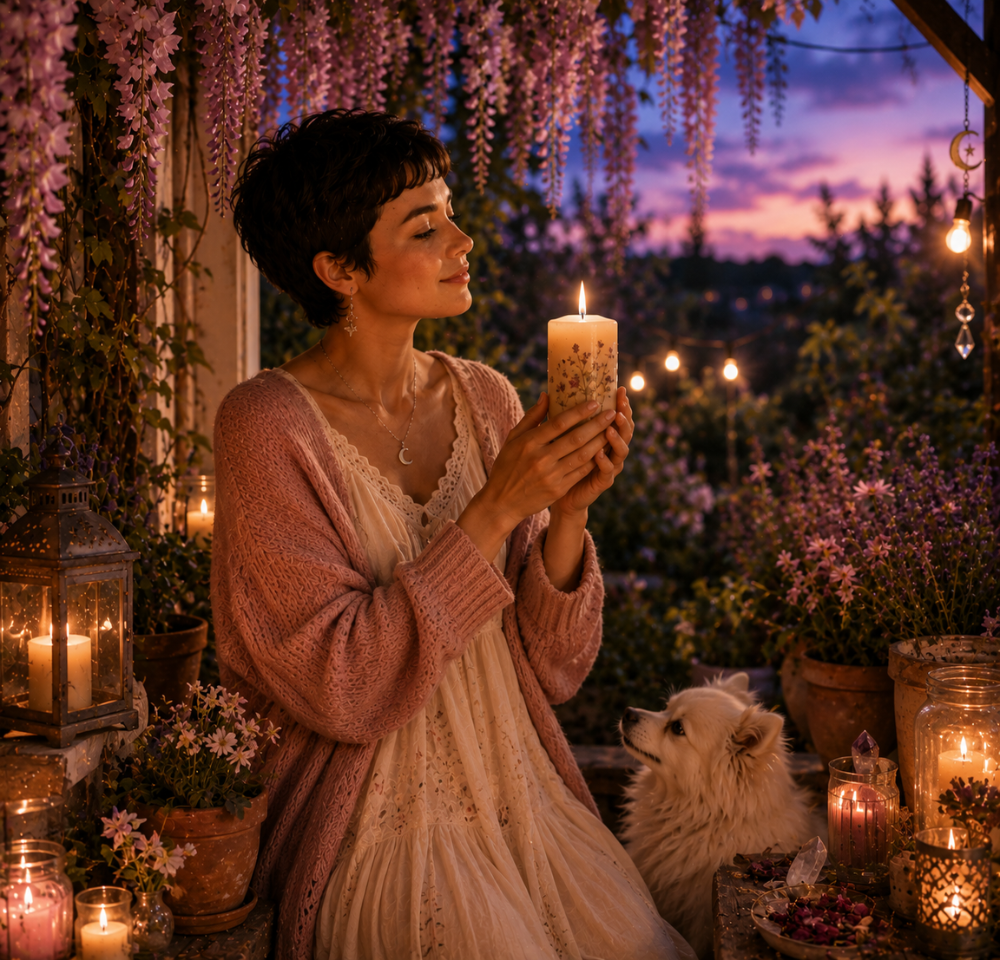
A steady candle flame is often considered one of the most reassuring signs in candle magic. It burns calmly without excessive flickering, leaning, or sputtering, creating a peaceful and consistent glow. Even if the flame isn’t perfectly still, it generally feels balanced and stable.
Many witches associate a steady flame with clear intentions and supportive energy. It may suggest that your focus is strong, your mind is settled, and your spell or ritual is unfolding without significant resistance. Rather than dramatic bursts of energy, this type of flame represents quiet confidence and steady progress.
Whenever I notice a calm, unwavering flame, I usually take it as a reminder to trust the process. Not every spell needs dramatic signs or extraordinary experiences to be meaningful. Sometimes the most powerful magic happens gently, growing little by little beneath the surface where we can’t immediately see it.
If you encounter a steady flame during your practice, allow yourself to relax into the moment. Continue your ritual, spend time in meditation, or simply enjoy the peaceful atmosphere the candle creates. A steady flame often encourages patience, reminding us that lasting transformation rarely happens overnight.
Above all, don’t underestimate the beauty of simplicity.
A calm flame may not seem exciting at first, but sometimes quiet confidence is exactly the message we need to hear.
A Flickering Flame
A flickering candle flame is one of the most talked-about signs in candle magic, and it’s easy to understand why. Watching a flame suddenly dance, sway, or move more than usual naturally captures our attention. Throughout history, many traditions have associated flickering flames with shifting energy, heightened emotions, or spiritual communication.
Some witches believe a flickering flame suggests that your intention is stirring energy into motion. Others interpret it as a sign that spiritual guides, ancestors, or unseen forces are present during the ritual. While these beliefs can be meaningful, they’re only one way of understanding what you’re seeing.
Before reaching a magical conclusion, I always take a quick look around the room. A draft from a nearby window, air conditioning, or even someone walking past can easily cause a candle to flicker. If you’ve ruled out those possibilities and the movement continues consistently, that’s when I begin paying closer attention to the overall feeling of the ritual rather than the flame alone.
When I experience a flickering flame, I don’t immediately ask, “What is it trying to tell me?” Instead, I ask myself, “How do I feel in this moment?” Sometimes the answer reveals far more than the candle ever could. The flame simply becomes a reminder to slow down and listen to my own intuition.
Rather than seeing a flickering flame as either good or bad, I prefer to think of it as an invitation to become more aware. Something may be shifting, whether externally or within yourself, and that’s worth observing with curiosity instead of fear.
A Tall Flame
A tall, bright candle flame often catches your eye immediately. It burns with confidence, reaching higher than expected and filling the room with a warm, steady glow. Many witches view this as a symbol of strong momentum and focused energy.
Traditionally, a tall flame is thought to suggest that your intention has been clearly set and that the energy surrounding your spell is active and supportive. Some practitioners believe it indicates quick progress or a particularly powerful connection to the work you’re doing.
At the same time, there are perfectly ordinary reasons why a flame might burn taller than usual. A freshly trimmed wick, a high-quality candle, or a room with plenty of oxygen can all produce a larger flame. That’s why I always observe the candle as a whole instead of focusing on one characteristic in isolation.
Whenever I see a strong, healthy flame, I take it as encouragement to keep moving forward. Whether the meaning is spiritual, practical, or a little of both, it’s a wonderful reminder to stay focused on the intention I’ve already set instead of constantly questioning whether it’s working.
Sometimes confidence doesn’t arrive with dramatic signs.
Sometimes it looks like quietly trusting yourself and continuing the journey.
A Low Flame
A low candle flame can feel disappointing at first, especially if you were expecting something bright and dramatic. However, I’ve learned that a smaller flame isn’t necessarily a negative sign. Like every other part of candle reading, its meaning depends on the bigger picture.
In many magical traditions, a low flame is associated with slower-moving energy, patience, or the need for additional focus. It may suggest that your intention requires more time to develop or that your own energy feels tired after a stressful period. Rather than seeing this as failure, I prefer to see it as an invitation to slow down.
There are also practical reasons why a candle might burn lower than expected. A wick that’s too short, certain types of wax, or a candle nearing the end of its life can all create a smaller flame. Looking at these possibilities first helps prevent unnecessary worry.
When I notice a low flame, I often use it as an opportunity to check in with myself. Have I been rushing lately? Am I emotionally exhausted? Have I been trying to force an outcome instead of allowing it to unfold naturally? Those quiet questions usually provide far more insight than the flame itself.
Not every goal needs to happen quickly.
Some of the most meaningful transformations take time, and a gentle flame can be a beautiful reminder that slow progress is still progress.
A Dancing Flame
Few candle flames are as captivating as one that seems to dance across the wick. It sways from side to side, changes direction unexpectedly, and almost appears to have a personality of its own. It’s no surprise that dancing flames have inspired countless interpretations throughout the history of witchcraft.
Many witches associate a dancing flame with active, dynamic energy. Some believe it suggests that your spell is encountering changing circumstances or that multiple influences are at work. Others see it as a sign of excitement, movement, or unexpected opportunities beginning to unfold.
Of course, dancing flames also have very ordinary explanations. Airflow, uneven wax pools, herbs within the candle, or slight changes in temperature can all cause the flame to move in beautiful and unpredictable ways. That’s why I always encourage observing the flame over several minutes instead of reacting to a single dramatic movement.
Personally, I love watching a dancing flame because it reminds me that life rarely follows a perfectly straight path. We make plans, adapt to unexpected situations, and often discover opportunities we never anticipated. Sometimes our magical practice reflects that same sense of movement and flexibility.
If a candle dances throughout your ritual, don’t rush to label it as positive or negative. Instead, ask yourself whether life currently feels like it’s shifting in unexpected ways. Quite often, the answer is already waiting within you.
A Crackling or Popping Flame
A candle that crackles, pops, or makes small snapping sounds can certainly grab your attention. It’s one of those moments that makes you pause and wonder whether something unusual is happening. Over the years, these sounds have become surrounded by all kinds of folklore and magical interpretations.
In some traditions, a crackling flame is believed to represent heightened energy or active communication. Some witches associate it with spirit guides, ancestors, or the feeling that a message is trying to come through. Others simply see it as a sign that the energy surrounding a spell is especially active.
Before assuming a spiritual meaning, it’s worth remembering that candles can make noise for perfectly ordinary reasons. Tiny air bubbles trapped in the wax, bits of herbs, moisture, essential oils, or even the wick itself can all create gentle popping sounds as the candle burns.
Whenever I hear a candle crackle, I don’t immediately jump to conclusions. Instead, I pay attention to the atmosphere of the ritual as a whole. How do I feel? What was I thinking about when the sound happened? Sometimes those little details become far more meaningful than the sound itself.
Whether you view a crackling flame as a magical sign or simply part of the candle’s natural behavior, let it encourage you to stay present. Sometimes paying closer attention is the most valuable message of all.
A Flame That Goes Out
Few moments during candle magic feel more disappointing than watching a flame suddenly go out on its own. It’s easy to worry that something has gone wrong or that your spell has somehow failed.
Personally, I don’t believe it’s that simple.
Some witches interpret an extinguished flame as resistance, while others see it as a sign that a ritual has reached its natural conclusion. I’ve even heard traditions that suggest the candle has completed its purpose sooner than expected. There isn’t one universally accepted interpretation, which is why I always encourage looking at the bigger picture instead of assuming the worst.
There are also many practical explanations. A hidden draft, a wick that’s become too short, excess melted wax, or a candle that has simply reached the end of its burn can all cause the flame to go out unexpectedly.
If one of my candles extinguishes itself, I usually pause for a few moments before deciding what to do next. Sometimes I’ll relight it with the same intention and continue the ritual. Other times, the moment feels like a natural place to stop and reflect. Both choices can be equally meaningful.
One extinguished candle doesn’t determine the success or failure of your magic.
Your intention, your focus, and the care you bring to your practice matter far more than any single moment during a ritual.
A Clean Burn
A candle that burns evenly from beginning to end often brings a quiet sense of satisfaction. The flame remains steady, the wax melts smoothly, and little is left behind once the candle has finished burning.
Many witches view a clean burn as a symbol of balance and harmony. It may suggest that your intention was clear, your energy felt focused, and the ritual unfolded without significant obstacles. It’s often considered a reassuring sign, though not necessarily a guarantee of any particular outcome.
Of course, candle quality also plays an important role. A well-made candle with a properly trimmed wick is naturally more likely to burn cleanly than one with uneven wax or manufacturing imperfections.
Rather than seeing a clean burn as proof that everything has gone perfectly, I like to appreciate it as a peaceful ending to the ritual. It reminds me that sometimes the simplest experiences are also the most beautiful.
Magic doesn’t always announce itself with dramatic signs.
Sometimes it arrives quietly, leaving behind nothing more than a calm heart and an empty candle holder.
Can Candle Flames Really Predict the Future?
This is probably one of the most common questions people ask when they first discover candle flame reading.
My answer is always the same.
Not exactly.
While many magical traditions use candle flames as a form of symbolism, I don’t believe a single flicker or dancing flame can accurately predict everything that’s about to happen in your life. If that were true, every witch watching the same candle would receive exactly the same message, and that’s simply not how spiritual practice works.
I’ve found that candle flames are much better at encouraging reflection than making predictions. They invite us to slow down, observe carefully, and think about our intentions, emotions, and current circumstances. The insights often come from that quiet reflection rather than from the flame itself.
That’s why I encourage treating candle flame meanings as gentle guidance rather than absolute truth. Let them inspire questions, spark curiosity, and deepen your awareness, but don’t allow them to create fear or anxiety. Witchcraft should help you feel more connected to yourself, not more worried about every tiny detail.
The most meaningful interpretations are often the ones that resonate deeply with your own intuition.
Keeping a Candle Journal
One of the best pieces of advice I can give anyone interested in candle magic is to keep a simple journal.
It doesn’t need to be elaborate or beautifully decorated. Even a small notebook or a digital journal is enough. The goal isn’t to create perfect records but to notice patterns over time.
Whenever I work with candles, I like to make a few notes afterward. I might write down the date, the moon phase, the purpose of the ritual, how the flame behaved, and how I felt during the experience. Looking back through those entries months later often reveals little connections I never would have noticed in the moment.
You might discover that your candles tend to burn steadily when you feel calm and focused, or that flickering flames often appear during emotionally intense periods. Those patterns become part of your own personal practice rather than relying entirely on someone else’s interpretations.
Over time, your journal becomes something much more valuable than a collection of candle meanings. It becomes a record of your own spiritual journey.
Candle Reading Is Personal
If there’s one thing I hope you take away from this guide, it’s that candle reading isn’t about memorizing a list of definitions.
It’s about building a relationship with your own practice.
Two witches can perform the same ritual using identical candles and come away with completely different experiences. Neither interpretation has to be wrong. Our backgrounds, beliefs, emotions, and intuition all shape the way we experience magic.
That’s one of the reasons I love witchcraft so much. It encourages curiosity instead of certainty. Rather than asking, “What does this flame always mean?” I think a much more helpful question is, “What does this moment mean to me?”
That simple shift changes everything. Instead of looking outside yourself for every answer, you begin trusting your own observations, experiences, and inner wisdom.
Final Thoughts
One of the things I love most about candle magic is how it encourages us to slow down.
In a world that’s constantly asking us to hurry, candles quietly invite us to do the opposite. We sit still, breathe a little deeper, and watch something as simple as a flame dancing in the darkness. Those few peaceful minutes often become just as meaningful as the ritual itself.
Over the years, I’ve come to see candle flame reading less as a way of finding hidden messages and more as a practice of mindful observation. The flame reminds me to be present, to trust my intuition, and to appreciate that not everything needs an immediate explanation.
Whether your candle burns steadily, flickers unexpectedly, or quietly fades away, remember that no single flame has the power to define your path. Your intentions, your actions, and the connection you build with your own practice will always matter far more than any interpretation found in a guide.
The next time you light a candle, don’t worry about searching for the perfect meaning.
Simply watch. Be present. And allow the quiet glow of the flame to remind you that some of life’s most meaningful moments happen when we slow down enough to truly notice them.