Lughnasadh (Lammas): A Beginner’s Guide to the First Harvest Festival
Every year, there’s a moment when summer begins to soften.
The days are still warm, but the mornings feel a little cooler. Gardens are overflowing with vegetables, herbs are ready to be gathered, and wild blackberries begin to appear along quiet country lanes. The scent of freshly baked bread drifts through kitchens, and fields of golden wheat sway gently in the breeze.
This is the season of Lughnasadh.
Celebrated on or around August 1st, Lughnasadh marks the first harvest of the year and is one of the eight sabbats that make up the Wheel of the Year. It’s a time to pause, appreciate the abundance around us, and recognize the efforts that have brought us to this point, whether those harvests come from our gardens, our work, or our personal growth.
For many modern witches, Lughnasadh is less about recreating ancient traditions exactly as they were and more about embracing the spirit of the season. It’s an opportunity to slow down, give thanks, and celebrate the simple joys that late summer has to offer.
Whether you’re discovering this sabbat for the first time or welcoming it back as a familiar friend, Lughnasadh invites us to celebrate the beauty of gratitude, community, and the changing seasons.
What Is Lughnasadh?
Lughnasadh, often pronounced LOO-na-sah, is the first of the three traditional harvest festivals celebrated in many modern Pagan and witchcraft traditions. It falls between the Summer Solstice and the Autumn Equinox, marking the beginning of the harvest season.
Unlike the bright energy of midsummer, Lughnasadh carries a quieter feeling. It’s the point in the year when we begin to notice that nature is changing. The first crops are ready to be gathered, days gradually become shorter, and the Wheel of the Year gently begins its journey toward autumn.
Although it’s closely associated with witchcraft today, Lughnasadh has roots that stretch back long before modern Pagan traditions. For ancient farming communities, the success of the harvest meant survival through the colder months ahead. This made the first harvest a time of celebration, gratitude, feasting, games, and gathering with family and neighbours.
Today, many witches continue to celebrate Lughnasadh by honouring both the abundance of nature and the personal milestones they’ve reached throughout the year.
Where Does Lughnasadh Come From?
The origins of Lughnasadh can be traced back to ancient Celtic Ireland, where it was one of the year’s most important seasonal festivals.
The celebration is traditionally linked to the Celtic god Lugh, a figure associated with craftsmanship, skill, leadership, and many different talents. According to Irish mythology, Lugh established the festival in honour of his foster mother, Tailtiu, who is said to have died after clearing large areas of land so they could be farmed for the people.
Rather than being a celebration of mourning alone, the festival became a way of honouring sacrifice, hard work, and the gifts of the harvest. Communities gathered to enjoy seasonal foods, athletic competitions, music, storytelling, trading, and celebrations that strengthened social bonds as much as they celebrated the land itself.
While the details of those ancient gatherings have naturally changed over the centuries, the heart of Lughnasadh remains remarkably familiar.
It’s still a celebration of gratitude, community, and recognising the rewards that come after dedication and perseverance.
Why Is It Also Called Lammas?
You may have noticed that Lughnasadh is often called Lammas, and while the two names are frequently used interchangeably today, they come from different traditions.
The word Lammas comes from the Old English phrase hlaf-mæsse, meaning “loaf mass.” During medieval times, it became customary for the first loaf baked from the year’s grain harvest to be blessed as a way of giving thanks for a successful season.
Because bread was such an important part of everyday life, this simple tradition became a meaningful symbol of nourishment, gratitude, and the connection between people and the land that sustained them.
Modern witches often celebrate under either name, and many embrace traditions from both. Whether you call it Lughnasadh or Lammas, the themes remain beautifully similar: celebrating the first harvest, expressing gratitude, and recognising the abundance that surrounds us.
What Does Lughnasadh Celebrate?
At its heart, Lughnasadh is a celebration of the first harvest.
It’s a reminder that every seed planted with care eventually reaches a season of growth. For ancient communities, this meant gathering grain, fruits, and vegetables that would help sustain them through the months ahead. Today, that idea extends beyond the garden.
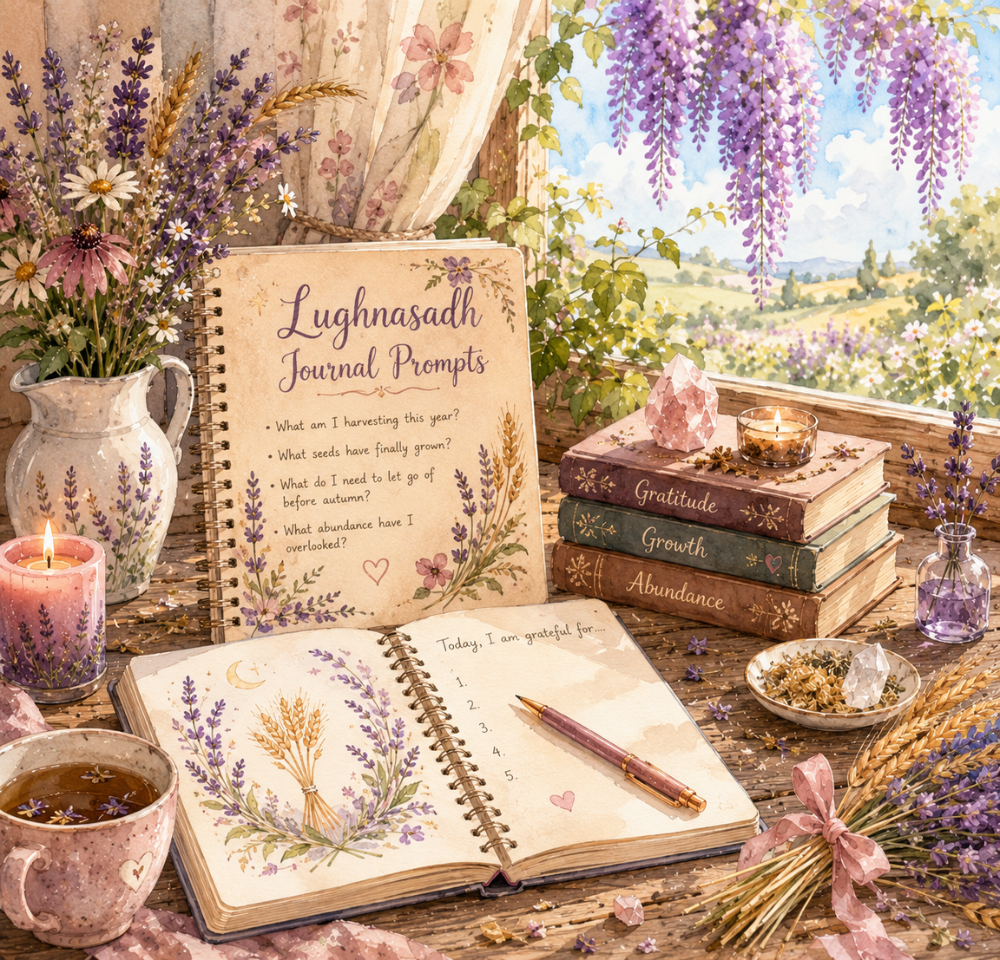
Many people use Lughnasadh as an opportunity to reflect on the intentions they set earlier in the year and consider how far they’ve come. Perhaps you’ve completed a project, learned a new skill, strengthened a relationship, or overcome a challenge that once felt impossible. These personal achievements are harvests too.
That’s one of the reasons I love this sabbat so much.
It gently reminds us that abundance isn’t measured only by what fills our cupboards. Sometimes it’s found in the confidence we’ve gained, the lessons we’ve learned, the friendships we’ve nurtured, or the quiet moments that have helped us grow into the person we are today.
As summer slowly begins to give way to autumn, Lughnasadh invites us to pause, celebrate what we’ve cultivated, and carry that sense of gratitude into the changing season.
Lughnasadh Symbols & Their Meanings
One of my favourite things about celebrating the Wheel of the Year is how each sabbat has its own collection of beautiful seasonal symbols. They aren’t just decorations for an altar or your home. Each one tells part of the story of the season and reminds us why this time of year has been celebrated for generations.
Lughnasadh is filled with symbols of gratitude, abundance, hard work, and the rewards of patience. Many of them come directly from nature, making it easy to bring the spirit of the first harvest into your home, whether you have a large garden or a small windowsill.
Here are some of the most meaningful symbols associated with Lughnasadh and what they represent.
Wheat
When most people think of Lughnasadh, golden wheat is often the first image that comes to mind.
As one of the earliest crops to be harvested, wheat has long symbolised abundance, nourishment, and the rewards that come from months of care and hard work. For farming communities, a successful wheat harvest meant food for the months ahead, making it one of the season’s most treasured gifts.
Today, many witches place dried wheat on their altar as a reminder to appreciate both the visible and unseen harvests in their own lives.
Bread
Freshly baked bread has become one of the best-known symbols of Lammas, thanks to the festival’s long connection with the first grain harvest.
Making bread from newly harvested grain represented gratitude for nature’s generosity and the effort that transformed a handful of seeds into something nourishing for the whole community.
Even if you don’t bake your own loaf, sharing bread with loved ones or placing a small loaf on your altar is a lovely way to honour the season.
Sunflowers
With their bright golden petals following the sun across the sky, sunflowers perfectly capture the warmth and abundance of late summer.
They remind us of optimism, growth, and making the most of the remaining weeks of sunshine before autumn arrives. Their bold appearance also brings a cheerful touch to seasonal altars and home decorations
Corn
Although corn isn’t part of every traditional Celtic celebration, it has become a popular harvest symbol in many modern Pagan practices.
Its tall stalks and golden ears represent prosperity, nourishment, and the abundance that comes from caring for something over time. Decorative corn, dried husks, or woven corn crafts often appear in Lughnasadh displays throughout the harvest season.
Blackberries
In many parts of Europe, blackberries begin ripening around Lughnasadh, making them one of the season’s sweetest gifts.
Gathering wild berries encourages us to spend time outdoors and appreciate the changing landscape. Whether enjoyed fresh, baked into a pie, or turned into homemade jam, blackberries celebrate nature’s generosity during late summer.
Apples
While apples are more strongly associated with Mabon, early varieties begin appearing around Lughnasadh in many regions.
They symbolise health, abundance, wisdom, and the continuous cycle of life. Adding a few fresh apples to your altar or harvest table helps bridge the seasons as summer slowly gives way to autumn.
Honey
Honey is often included in Lughnasadh celebrations as a symbol of sweetness, prosperity, and the rewards of steady effort.
Bees spend countless hours gathering nectar before producing honey, making it a beautiful reminder that meaningful results often come from patience and consistency rather than overnight success.
A small jar of local honey or a drizzle over fresh bread makes a simple but meaningful seasonal offering.
Harvest Baskets
A basket overflowing with seasonal fruits, vegetables, herbs, and flowers has become one of the most recognisable images of the first harvest.
Harvest baskets celebrate gratitude for everything nature has provided while reminding us to appreciate life’s abundance in all its forms.
They also make beautiful centrepieces for Lughnasadh celebrations, bringing together many of the season’s symbols in one place.
The Sun
Although the days gradually begin growing shorter after the Summer Solstice, the sun still shines brightly during Lughnasadh.
Its warmth ripens the final summer crops and reminds us that the growing season isn’t quite over. Candles in shades of gold, yellow, and amber are often used to honour the sun’s life-giving energy and the light that continues to sustain the harvest.
Bees
Few creatures embody the spirit of Lughnasadh quite like bees.
Their dedication, teamwork, and connection to flowering plants make them powerful symbols of community, cooperation, and abundance. Watching bees move from bloom to bloom is a gentle reminder that even the smallest actions contribute to something much greater.
Oak Leaves & Acorns
The mighty oak has long been associated with strength, endurance, and wisdom.
During Lughnasadh, its leaves and early acorns remind us that every future harvest begins with something small. They symbolise the quiet promise of growth and encourage us to recognise the seeds we’re planting today for the seasons still to come.
Bringing the Symbols Together
One of the lovely things about Lughnasadh is that you don’t need every symbol to celebrate its spirit.
Perhaps you bake a loaf of bread, gather a handful of wildflowers, or place a few sunflowers on your table. Maybe you visit a local farmers’ market or simply enjoy a quiet walk through nature, noticing how the landscape begins to change.
The symbols of Lughnasadh aren’t about creating the perfect seasonal display. They’re gentle reminders to slow down, appreciate the abundance already present in your life, and celebrate the beauty of a season that encourages both gratitude and growth.
As with every sabbat, the most meaningful traditions are often the simplest ones.
Final Thoughts
Lughnasadh is more than a celebration of ripening fields and overflowing harvest baskets. It’s a gentle reminder to pause and appreciate everything that has grown, both around us and within us.
Whether you’re baking your first loaf of bread, arranging a handful of late-summer flowers on your altar, or simply spending a quiet afternoon reflecting on the months behind you, there are countless ways to honour the spirit of this sabbat. The beauty of Lughnasadh isn’t found in creating the perfect celebration but in taking a moment to recognise the abundance already present in your life.
As the Wheel of the Year begins its slow turn toward autumn, this first harvest festival encourages us to celebrate our achievements, express gratitude for what we’ve received, and carry those blessings into the changing season.
However you choose to celebrate, may your Lughnasadh be filled with warmth, gratitude, and the simple joys that make this time of year so special.
Happy Lughnasadh, and blessed be. 🌾