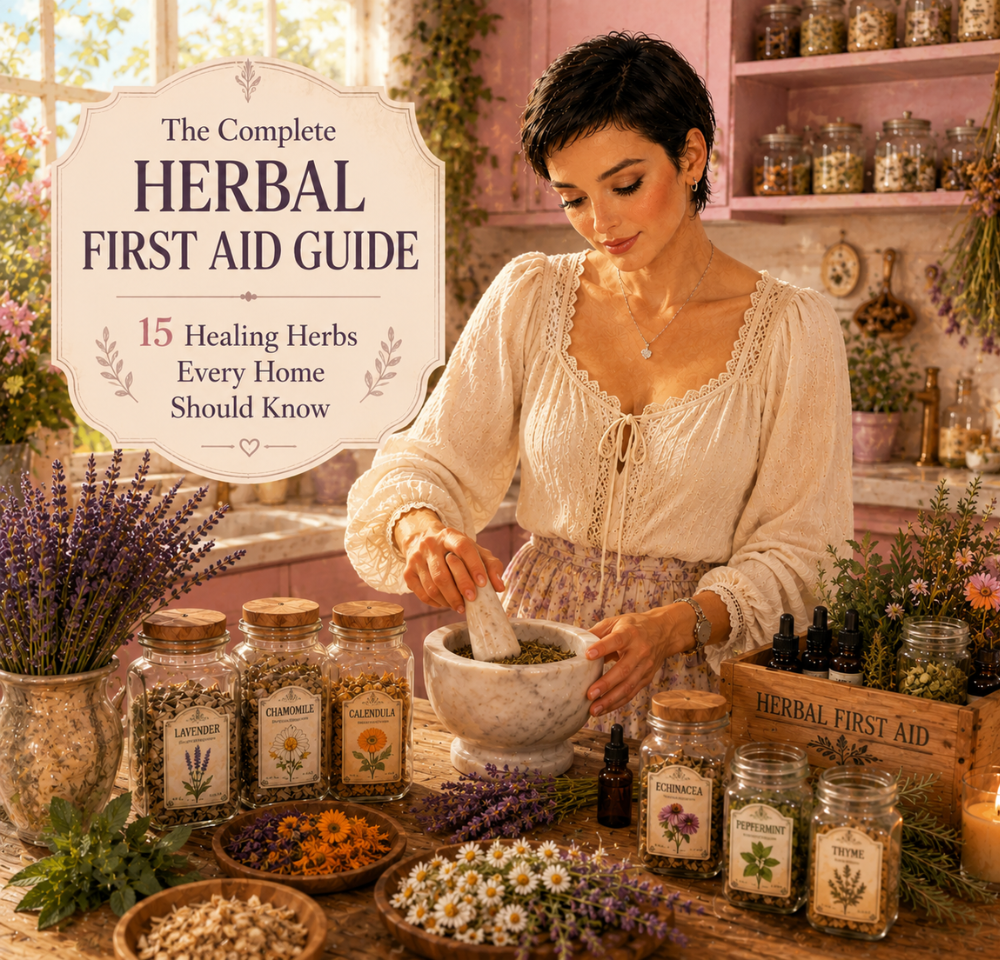
The Complete Herbal First Aid Guide: 15 Healing Herbs Every Home Should Know
Whenever I step into my garden, I’m reminded that some of the most useful plants are also the most beautiful.
Long before pharmacies existed on every street corner, people relied on the herbs growing around them. Calendula was turned into soothing salves, peppermint became comforting tea after a heavy meal, and lavender was tucked beneath pillows or infused into oils after long days of work. These weren’t unusual remedies. They were simply part of everyday life, passed from one generation to the next.
That’s one of the things I love most about herbalism. It encourages us to slow down and become more familiar with the plants around us. Instead of reaching for a bottle every time we feel slightly uncomfortable, we learn which herbs have been traditionally used to comfort, soothe, and support our bodies. It’s a practice that helps me feel more connected to nature and more appreciative of the knowledge that’s been shared for centuries.
Of course, herbs aren’t a replacement for modern medicine, and I don’t believe they should be treated that way. They can be wonderful companions for everyday wellness, but serious injuries, persistent symptoms, allergic reactions, and medical emergencies always deserve proper medical care. I like to think of herbal first aid as something that works alongside modern healthcare, not instead of it.
Whether you’re just beginning to explore herbalism or you’ve been filling your cupboards with dried herbs for years, I hope this guide inspires you to discover a few new favorites and build a herbal first aid kit that feels practical, comforting, and uniquely your own.
What Is Herbal First Aid?
Herbal first aid is exactly what it sounds like: using herbs that have been traditionally valued for supporting everyday aches, minor discomforts, and common household situations.
For me, it’s less about trying to find a herb for every possible problem and more about learning which plants I trust enough to keep close at hand. A jar of dried chamomile for tea, a pot of calendula salve, or a fresh aloe vera plant on the windowsill can all become part of a home that’s prepared for life’s little moments.
Some herbs are traditionally used to soothe irritated skin after spending too much time in the sun. Others have long been enjoyed in teas to bring comfort during cold weather or after a heavy meal. A few are commonly infused into oils or made into salves for use on dry skin, while others are appreciated simply because their calming aroma helps us unwind after a stressful day.
One of the biggest lessons herbalism has taught me is that you don’t need to know hundreds of plants to get started. In fact, I think it’s far better to become familiar with a small collection of herbs and learn how to use them well than to fill your cupboards with dozens of jars you’ll rarely open.
As your confidence grows, so will your herbal collection. Before long, you’ll find yourself reaching for herbs almost without thinking, whether you’re brewing a comforting cup of tea, making a simple infused oil, or gathering fresh sprigs from the garden on a sunny afternoon.
Building Your Herbal First Aid Kit
If you’re new to herbalism, don’t feel like you need to buy every herb all at once.
I’ve found it’s much easier, and much more enjoyable, to build your collection slowly. Start with a handful of herbs you’ll actually use, learn what each one is traditionally known for, and then add new plants as your confidence grows. Over time, you’ll naturally create a collection that suits your own home and lifestyle.
I like storing my herbs in glass jars with handwritten labels so I can quickly see what I have. Keeping them somewhere cool, dry, and away from direct sunlight helps them stay fresh for longer, and there’s something satisfying about opening a cupboard filled with neatly arranged jars of chamomile, peppermint, lavender, and calendula.
Alongside dried herbs, I also keep a few simple supplies nearby. A small mortar and pestle, glass bottles for infused oils, beeswax for homemade salves, muslin bags for straining herbs, and a reliable tea infuser are some of the items I reach for most often. None of them are expensive, but together they make preparing herbal remedies much easier.
The wonderful thing about creating your own herbal first aid kit is that it grows with you. Every herb you learn about, every recipe you try, and every season spent in the garden adds another layer to your knowledge. Before long, your cupboard becomes more than just a place to store herbs. It becomes a collection of recipes, traditions, and little pieces of experience gathered over time.
Before We Explore the Herbs
Before we dive into the herbs themselves, I’d like to share one important reminder.
Natural doesn’t always mean safe.
Many herbs have been used in traditional herbal practices for generations, but that doesn’t mean every herb is suitable for every person. Pregnancy, breastfeeding, allergies, medical conditions, and certain medications can all affect whether a particular herb is appropriate to use.
Whenever you’re trying a new herb, take a little time to learn about it first. If you’re unsure whether it’s right for your circumstances, speak with your doctor, pharmacist, or a qualified healthcare professional before using it regularly. This is especially important if you’re pregnant, trying to conceive, breastfeeding, or taking prescription medication.
Herbalism has always been about working with nature respectfully, and I believe that includes respecting our own bodies too.
Aloe Vera
If I could only keep one medicinal plant in my home, aloe vera would be very close to the top of my list.
It’s one of those plants that’s both beautiful and practical. Mine has lived on sunny windowsills for years, quietly growing until I need it. There’s something comforting about knowing it’s always there, ready whenever life brings one of those little accidents we all experience.
Traditionally Used For
Aloe vera has been traditionally used to soothe minor burns, sun-exposed skin, and everyday skin irritation. The cool gel inside its thick leaves has been valued for centuries because of its refreshing and moisturizing feel.
How I Like to Use It
Whenever I accidentally spend a little too long in the sun or end up with dry, irritated skin, I’ll cut a small piece from one of the outer leaves and scoop out the clear gel. I apply it directly to the area and let it absorb naturally.
It’s one of the easiest herbal remedies to keep at home because the plant practically takes care of itself.
Things to Keep in Mind
Only use healthy, clean leaves, and avoid applying aloe to deep wounds or serious burns. If irritation develops, discontinue use and seek medical advice if needed.
Calendula
Calendula is one of those cheerful flowers that always manages to brighten the garden.
Behind those bright orange and golden petals is a herb that’s been treasured in traditional herbalism for generations. It’s often one of the first herbs people learn about, and it’s easy to understand why.
Traditionally Used For
Calendula has long been used in herbal preparations designed to comfort dry or irritated skin. It’s commonly infused into oils before being turned into balms, creams, and salves.
How I Like to Use It
Calendula-infused oil is something I always enjoy making during the summer when the flowers are in bloom. Once the petals have dried, I infuse them in a carrier oil for several weeks before using that oil in homemade salves.
It’s one of my favorite ingredients because it’s so versatile and feels like sunshine captured in a jar.
Things to Keep in Mind
If you have allergies to plants in the daisy family, it’s a good idea to do a small patch test before using calendula on your skin.
Lavender
Whenever I think of relaxing evenings, lavender is usually the first herb that comes to mind.
Its fragrance instantly reminds me of slow mornings, freshly washed linen, and peaceful summer gardens buzzing with bees. While it’s one of the prettiest herbs to grow, it’s also one of the most versatile.
Traditionally Used For
Lavender has traditionally been enjoyed for its calming aroma and is commonly used in teas, bath blends, infused oils, linen sachets, and homemade skincare products.
How I Like to Use It
I love adding dried lavender to bath salts, herbal sleep pillows, and evening tea blends. A few sprigs tucked into a wardrobe or linen drawer also leave everything smelling wonderfully fresh.
When the garden is in full bloom, I’ll often dry bunches of lavender and hang them around the house. They look beautiful and smell even better.
Things to Keep in Mind
Lavender is wonderfully fragrant, but a little goes a long way. If you’re using lavender essential oil, always dilute it properly before applying it to the skin.
Chamomile
Chamomile has earned a permanent place in my kitchen cupboard.
There’s something incredibly comforting about making a warm cup of chamomile tea after a long day. Whether I’m winding down for the evening or just taking a quiet break, it’s one of the herbs I reach for most often.
Traditionally Used For
Chamomile has traditionally been enjoyed as a relaxing herbal tea and has also been used in herbal rinses and skincare preparations.
How I Like to Use It
Most often, I brew a simple cup of chamomile tea and enjoy it while reading or sitting outside in the garden. Occasionally, I’ll allow the tea to cool before using it as a soothing compress for tired eyes or warm skin after a sunny afternoon.
It’s a simple ritual, but one I’ve come to appreciate more and more over the years.
Things to Keep in Mind
People with allergies to plants in the daisy family should use chamomile with caution. If you’re pregnant, breastfeeding, or taking medication, it’s always worth checking with a healthcare professional before using herbal products regularly.
Peppermint
If there’s one herb that never seems to stay in my cupboard for very long, it’s peppermint.
Whether I’m making tea after dinner, adding fresh leaves to summer drinks, or drying bunches from the garden, it’s a plant I use throughout the year. It’s refreshing, easy to grow, and one of the first herbs I’d recommend to anyone starting their own herb garden.
Traditionally Used For
Peppermint has traditionally been enjoyed to support healthy digestion and is often brewed into tea after meals. Its refreshing aroma has also made it a popular choice for steam inhalations and cooling herbal preparations.
How I Like to Use It
A warm mug of peppermint tea is usually my first choice after a particularly heavy meal. During the summer, I also love adding fresh leaves to iced water with slices of lemon for a drink that’s both refreshing and beautifully simple.
Fresh peppermint grows enthusiastically in the garden, so I like to harvest and dry plenty while it’s in season. That way I always have enough for tea throughout the colder months.
Things to Keep in Mind
Peppermint isn’t suitable for everyone. Some people with acid reflux or gastroesophageal reflux disease (GERD) may find that peppermint makes their symptoms worse. If that’s something you experience, it’s best to choose another herbal tea instead.
Thyme
Most people know thyme as a kitchen herb, but it’s been appreciated for much more than cooking throughout history.
Its earthy aroma and hardy nature have made it a favorite in herb gardens for centuries, and I always enjoy having a few plants growing near my kitchen door. Fresh thyme is wonderful in recipes, but it’s equally useful dried for herbal teas and homemade infusions.
Traditionally Used For
Thyme has traditionally been used in herbal teas and steam preparations, particularly during the colder months. It’s also been valued in homemade herbal rinses and infused oils.
How I Like to Use It
When the weather turns cold, I often brew a simple thyme tea with a little honey and lemon. It has a wonderfully warming flavor that makes it perfect for cozy evenings indoors.
Fresh thyme is also one of my favorite herbs to cook with, so it’s one of those plants that rarely goes to waste.
Things to Keep in Mind
Culinary amounts of thyme are generally well tolerated, but concentrated thyme essential oil should always be diluted properly before external use and should never be taken internally unless advised by a qualified healthcare professional.
Elderberry
Every autumn, elderberry reminds me that nature has its own rhythm.
For generations, people have gathered the dark berries from elder trees to make syrups, jams, and traditional winter remedies. It’s one of those herbs that carries a long history of seasonal use.
Traditionally Used For
Elderberries have traditionally been prepared as syrups, teas, and preserves, especially during the colder months of the year.
How I Like to Use It
Homemade elderberry syrup has become one of my favorite seasonal traditions. I enjoy making a fresh batch each autumn and keeping a jar in the refrigerator to use throughout winter.
There’s something incredibly satisfying about turning freshly harvested berries into something that will be enjoyed for months afterward.
Things to Keep in Mind
Raw elderberries, leaves, stems, and seeds should not be eaten, as they contain naturally occurring compounds that can make people unwell. Elderberries should always be properly cooked before being used in syrups, jams, or other recipes.
Echinacea
Echinacea is probably one of the best-known herbs in modern herbalism.
Its striking purple flowers make a beautiful addition to the garden, while its long history of traditional use has earned it a place in many herbal cupboards around the world.
Traditionally Used For
Echinacea has traditionally been enjoyed as a tea, tincture, or herbal preparation, particularly during the colder seasons when many people focus on supporting their overall wellness.
How I Like to Use It
I usually keep dried echinacea on hand for herbal tea blends during autumn and winter. It’s one of those herbs I don’t use every day, but I appreciate having it available when the seasons begin to change.
The flowers are also wonderfully attractive to bees and butterflies, making them a lovely choice for pollinator-friendly gardens.
Things to Keep in Mind
People with allergies to plants in the daisy family should use echinacea with caution. If you have an autoimmune condition, are taking medication, or are pregnant or breastfeeding, speak with your healthcare provider before using echinacea regularly.
Rosemary
Rosemary is one of those herbs I never seem to have enough of. I grow it in the garden, cook with it throughout the year, and always dry a few bundles before winter arrives. Its fresh, woody scent instantly reminds me of sunny afternoons spent harvesting herbs.
Traditional Uses
For generations, rosemary has been enjoyed in teas, infused oils, bath blends, and massage oils. It’s also become a favorite in homemade hair rinses and natural skincare recipes.
How I Use It
I love infusing rosemary in olive oil for homemade massage oils and adding fresh sprigs to soups, roasted vegetables, and bread. It’s one of those herbs that’s just as useful in the kitchen as it is in my herbal cupboard.
If you’re pregnant, breastfeeding, or have an underlying medical condition, it’s always worth checking with a healthcare professional before using rosemary medicinally or in concentrated forms such as essential oils.
Marshmallow Root
Despite its name, marshmallow root has nothing to do with the sweet treats we roast over a campfire.
This humble plant has been valued in traditional herbalism for centuries and is one of those herbs that always surprises people when they first discover its history. While the fluffy confection eventually borrowed its name from the plant, herbalists have long appreciated marshmallow root for entirely different reasons.
Traditional Uses
Marshmallow root has traditionally been prepared as teas, cold infusions, syrups, and herbal preparations. It’s especially known for its naturally soothing, mucilaginous texture, which gives it a smooth, silky feel when prepared correctly.
How I Use It
I like preparing marshmallow root as a cold infusion rather than pouring boiling water over it. Allowing it to steep overnight creates a smooth, almost velvety drink that’s unlike any other herbal tea. It’s a fascinating herb to experiment with, especially if you’ve never worked with it before.
If you’re taking prescription medication, keep in mind that marshmallow root may affect how some medicines are absorbed. It’s usually recommended to leave a few hours between taking medication and drinking marshmallow root preparations.
Garlic
Garlic is one of those ingredients that almost everyone already has in their kitchen, but it’s been appreciated for far more than its flavor throughout history.
For thousands of years, garlic has appeared in traditional herbal practices around the world. Even today, it’s one of the best examples of how food and herbalism often go hand in hand.
Traditional Uses
Garlic has traditionally been included in everyday cooking as well as herbal preparations. It’s long been valued as part of a balanced diet and has become one of the most widely used culinary herbs across many cultures.
How I Use It
Fresh garlic finds its way into countless meals in my kitchen, from soups and pasta sauces to roasted vegetables and homemade bread. During the colder months, I also enjoy adding plenty of garlic to comforting broths and slow-cooked meals.
Sometimes the simplest herbs are the ones we use the most without even thinking about it.
Rosemary
Rosemary is one of my absolute favorite herbs.
Its woody fragrance instantly reminds me of Mediterranean gardens warmed by the afternoon sun. It’s hardy, beautiful, easy to grow, and one of those herbs that always earns its place in both the kitchen and the herb garden.
Traditional Uses
Rosemary has traditionally been used in cooking, infused oils, bath preparations, herbal rinses, and aromatic blends. Its fresh scent has made it a popular herb in homes for generations.
How I Use It
I usually have fresh rosemary growing outside my kitchen, making it easy to snip a few sprigs whenever I’m cooking. I also enjoy drying bundles to use throughout winter and occasionally infusing rosemary in carrier oil for homemade skincare and massage oils.
It’s one of those herbs that always makes the house smell warm and welcoming.
If you’re using rosemary essential oil, remember that it should always be properly diluted before applying it to the skin.
Tea Tree Oil
Tea tree oil is a little different from the other herbs in this guide because it’s most commonly used as an essential oil rather than a tea or culinary herb.
It’s become a staple in many natural skincare routines and homemade cleaning products, and a small bottle lasts surprisingly long because only a few drops are usually needed.
Traditional Uses
Tea tree oil has traditionally been used in diluted skincare preparations and natural household products. Thanks to its fresh, clean scent, it’s also a popular ingredient in homemade sprays and surface cleaners.
How I Use It
I keep a small bottle in my herbal cupboard for homemade cleaning sprays and occasionally add a few diluted drops to skincare recipes that call for it. Since it’s so concentrated, I always measure carefully rather than adding it by eye.
A little really does go a long way.
Tea tree oil should never be swallowed and should always be diluted before applying it to the skin. It’s also important to keep it away from pets, particularly cats and dogs, as essential oils can be harmful to them.
Starting Your Own Herbal Garden
One of the greatest joys of herbalism is growing the very plants you use.
You don’t need a large garden or years of gardening experience to get started. In fact, some of the most useful herbs are perfectly happy growing in pots on a balcony, patio, or sunny windowsill. Watching them grow, harvesting them by hand, and eventually using them in your own teas or skincare is an incredibly rewarding experience.
When I first began exploring herbs, I only had a few small pots. Over time, my collection slowly expanded, and so did my knowledge. Looking back, I’m glad I didn’t try to grow everything at once. Learning a handful of herbs really well was far more enjoyable than feeling overwhelmed by dozens of unfamiliar plants.
If you’re wondering where to begin, these herbs are wonderful choices for beginners:
- Calendula
- Chamomile
- Lavender
- Peppermint
- Rosemary
- Thyme
They’re relatively easy to care for, useful in everyday life, and attract plenty of bees and butterflies to the garden. Many of them also dry beautifully, allowing you to enjoy your harvest throughout the year.
As your confidence grows, you can gradually add more herbs and experiment with making infused oils, salves, herbal teas, bath blends, and other simple preparations. Before you know it, your little herb collection becomes something much more meaningful. It becomes a reminder to slow down, spend time outdoors, and appreciate the quiet rhythm of the changing seasons.
Herbal Safety Tips
Herbs have been used in traditional practices for generations, but they’re still powerful plants and deserve the same respect as any other wellness product.
Before trying a new herb, take a little time to learn about it. Some herbs may not be suitable during pregnancy or breastfeeding, while others can interact with certain medications or medical conditions. If you’re ever unsure, it’s always best to seek advice from your doctor, pharmacist, or a qualified healthcare professional.
It’s also worth remembering that more isn’t always better. Following recommended preparation methods and using herbs in moderation is usually the best approach. Natural remedies are there to support your wellbeing, not replace professional medical care.
Finally, always make sure you’ve correctly identified any wild plants before harvesting them. Some edible herbs have poisonous lookalikes, so if you’re not completely confident, it’s much safer to purchase herbs from a trusted supplier.
Frequently Asked Questions
How long do dried herbs stay fresh?
When stored in airtight containers away from heat, moisture, and direct sunlight, most dried herbs keep their best flavor and aroma for around one year. While they may still be safe to use after that, they’ll gradually lose their strength over time.
Can I grow these herbs indoors?
Absolutely. Herbs like basil, peppermint, thyme, rosemary, parsley, and chives can all thrive indoors if they receive plenty of sunlight. A bright windowsill is often all you need to get started.
Are herbal remedies a replacement for medical treatment?
No. Herbal remedies can be a wonderful addition to your wellness routine, but they shouldn’t replace advice or treatment from qualified healthcare professionals. If you’re dealing with severe symptoms, ongoing health concerns, or a medical emergency, always seek appropriate medical care.
What’s the easiest herb for beginners?
Calendula, chamomile, peppermint, lavender, rosemary, and thyme are all fantastic places to start. They’re widely available, relatively easy to grow, and have a long history of traditional use.
Where should I buy herbs?
Whenever possible, buy herbs from reputable suppliers that specialize in culinary or herbal products. High-quality herbs usually have a stronger aroma, richer color, and are less likely to contain unwanted contaminants.
Final Thoughts
Herbalism isn’t about knowing every plant or filling your cupboards with dozens of jars overnight. It’s about building a relationship with nature one herb at a time.
Every cup of tea you brew, every flower you harvest, and every new recipe you try teaches you something. Over time, those small experiences grow into confidence, and before you realize it, herbs become a natural part of your everyday life.
I still find myself learning something new every season, and I think that’s one of the reasons I love herbalism so much. There’s always another plant to discover, another recipe to experiment with, or another quiet afternoon spent wandering through the garden with a basket in hand.
Whether you’re planting your very first herb, drying lavender for the first time, or making your own calendula salve, remember that every expert started exactly where you are now.
Take your time, stay curious, and enjoy the journey. The plants have a wonderful way of teaching us patience, appreciation, and the simple joy of slowing down.
Happy gardening, and blessed growing. 🌿💜